
Source: Refindustry, “U-3ARC Proposes African RAC Certification Framework at Chillventa 2026” (October 2026) — refindustry.com
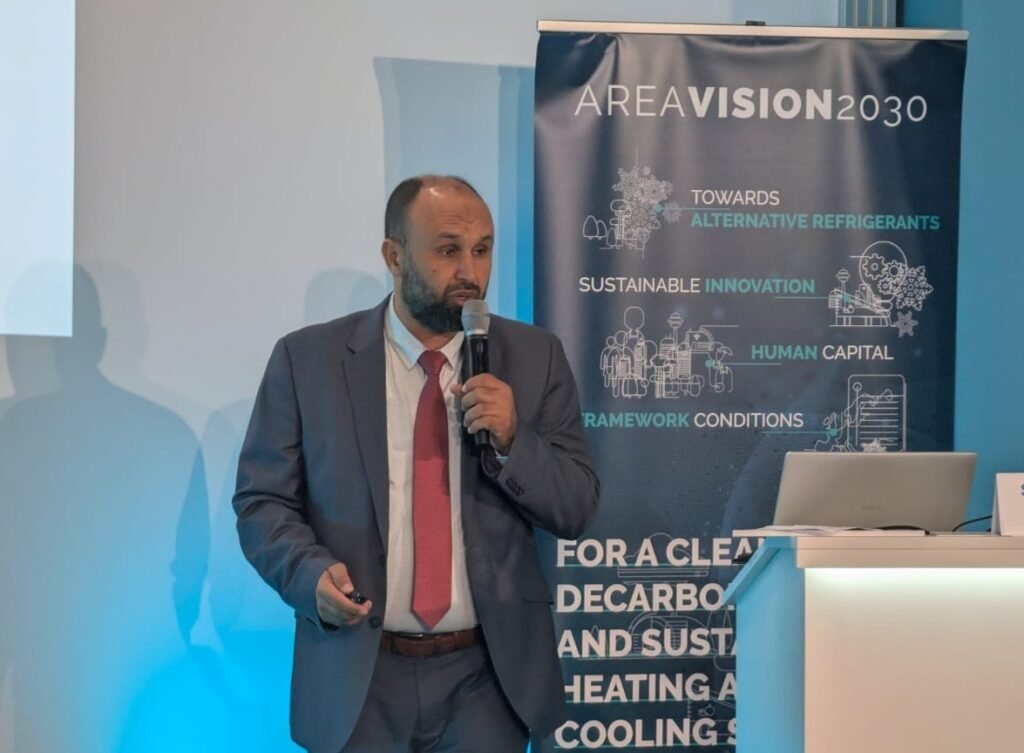
At Chillventa 2026 in Nuremberg (13–15 October), Said El Harch, vice president of U-3ARC, presented a blueprint for certifying refrigeration and air-conditioning technicians across Africa.
El Harch, who also directs Alpha Refrigeration Service, framed the demand around three forces: the shift to R290, R32, CO₂ and NH₃; rising cooling demand and more complex equipment; and a workforce in which formally trained and informally trained technicians work side by side.
Progress varies across the continent. Training centres are under development in Tunisia, Burkina Faso and Morocco, while Ghana, Benin, Nigeria, Egypt and Tunisia each follow national approaches.
He named six challenges: fragmented certification schemes; limited recognition of informal experience; too few practical assessment facilities and qualified assessors; sustainable financing and governance; safety requirements for new refrigerants; and recognition of certificates by authorities and employers.
A four-level competency framework
The proposal sets out four levels — foundational skills; servicing operations; alternative refrigerants; and advanced diagnostics, controls, energy performance and supervision — backed by quality-assured assessments, digital credentials and technician registries.
From national schemes to mutual recognition
For regional recognition the plan combines national certification frameworks, a common African competency reference, quality-assured assessment, digital credentials and registries, and mutual recognition between participating countries. U-3ARC wants to connect national associations, training organisations and international partners.
The recommendations also include mapping existing certification and licensing systems, investing in practical training centres and assessor development, and piloting cross-border recognition. “U-3ARC can facilitate dialogue and knowledge transfer while national authorities retain responsibility for regulation and certification,” El Harch said.
YAQIVENT’s view
For exporters the signal is clear: certification is moving from a technical requirement to a condition of market access. Once African countries adopt a common competency standard, it is only a matter of time before tender documents require that installation and servicing be carried out by certified technicians. Suppliers that bundle training, manuals and certification support into the offer will find it easier to enter local channels.
It is also a reminder for Chinese HVAC manufacturers: the safe handling, charging and recovery of A2L/A3 refrigerants such as R290 and R32 is precisely where overseas technicians lack knowledge. Multi-language installation manuals, refrigerant-safety training and responsive after-sales support build longer relationships than price cuts alone. Central Asia faces a similar skills gap, so the “equipment + training + certification” model travels well.
Source: Refindustry (refindustry.com). This is an industry summary; the commentary section is YAQIVENT’s own analysis.